
Why Gutter Guards Fail (And How to Spot a Bad Installation)
Gutter guards are supposed to solve a simple problem: keep leaves and debris out while letting rainwater move through the gutter.
So when a homeowner pays to have guards installed and still sees water spilling over the edge, pine needles packed into the system, or sections pulling away from the roofline, the frustration is understandable.
The problem is that gutter guards don't fail for just one reason.
Sometimes the product is wrong for the property. Sometimes the existing gutters were already undersized, sagging, or pitched poorly. And very often, the guard itself was installed in a way that created new drainage problems instead of fixing the old ones.
At Home Exteriors by The Men with Tools, we regularly see homeowners who aren't shopping for their first gutter guard system.
They're shopping for their second one because the first installation didn't work.
This guide explains why gutter guards fail, what bad installation looks like, and what to check before paying someone to replace a system that's already disappointing you.
Quick Answer: Why Do Gutter Guards Fail?
The wrong guard was used for the debris around the home- The guard was installed at the wrong angle
- Water can't enter the system fast enough during heavy rain
- Debris collects at valleys or transitions
- The installer covered up an existing gutter problem
- Sections were poorly fastened or left with gaps
- Fine debris clogged the filter surface
- Downspouts are restricted or undersized
- The system was installed without considering the roof pitch
- Nobody explained that gutter guards still need periodic maintenance
A guard can be a good product and still perform badly if the installation is wrong.
That's why diagnosing a failing system should start with the whole drainage setup, not just the guard sitting on top.
Red Flag #1: Water Is Pouring Over the Front of the Gutter
This is one of the clearest signs something isn't working.
During a normal rain, water should move from the roof, through or around the guard, into the gutter, and out through the downspouts.
If water is shooting over the front edge, several things could be happening.
The guard may not be accepting water fast enough. Debris may be covering the intake surface. A reverse-curve system may be installed at the wrong angle. Or the gutter itself may be too small, poorly pitched, or partially clogged.
Some guard types are more sensitive to heavy rainfall than others. Foam guards, for example, can struggle with water filtration and may overflow during intense rain. Reverse-curve systems depend on water following the intended surface path and can also be sensitive to installation angle and roof conditions.
A good installer should look at why the water is missing the gutter, not simply tell you that "all gutter guards overflow sometimes."
Red Flag #2: The Guard Is Flat When It Should Be Pitched
This is a common installation issue with screen and micro-mesh systems.
A quality guard should generally encourage debris to move away from the water-entry surface instead of creating a flat shelf where leaves can sit.
If the guard is installed too flat, wet leaves, pine needles, pollen, and roof grit can accumulate on top.
Then the guard begins filtering debris exactly as intended—but with one problem:
The filter itself becomes clogged.
Micro-mesh systems tend to perform very well when properly installed, but even effective products can lose water intake if debris mats across the surface. Current testing notes that micro-mesh installation can require careful bending, trimming, and adjustment to fit the roof and fascia correctly.
If an installer treated every section of your roofline exactly the same without accounting for slope, fascia position, and gutter height, that's worth a closer look.
Red Flag #4: Pine Needles Are Sticking Straight Into the Guard
If you live around mature pines, you've probably seen this.
Pine needles don't behave like leaves.
They're thin, stiff, and capable of lodging vertically into openings. On wider screens they can penetrate the guard, bridge over one another, and create a base for additional debris.
Even when needles don't fully enter the gutter, they can become embedded in the top surface.
That doesn't necessarily mean the guard is defective.
It may mean the system isn't fine enough for the debris around your home.
This is why the question shouldn't be:
"Do you install gutter guards?"
It should be:
"What type of guard are you recommending for the trees around my property, and why?"
Red Flag #5: Leaves Keep Piling Up at Roof Valleys
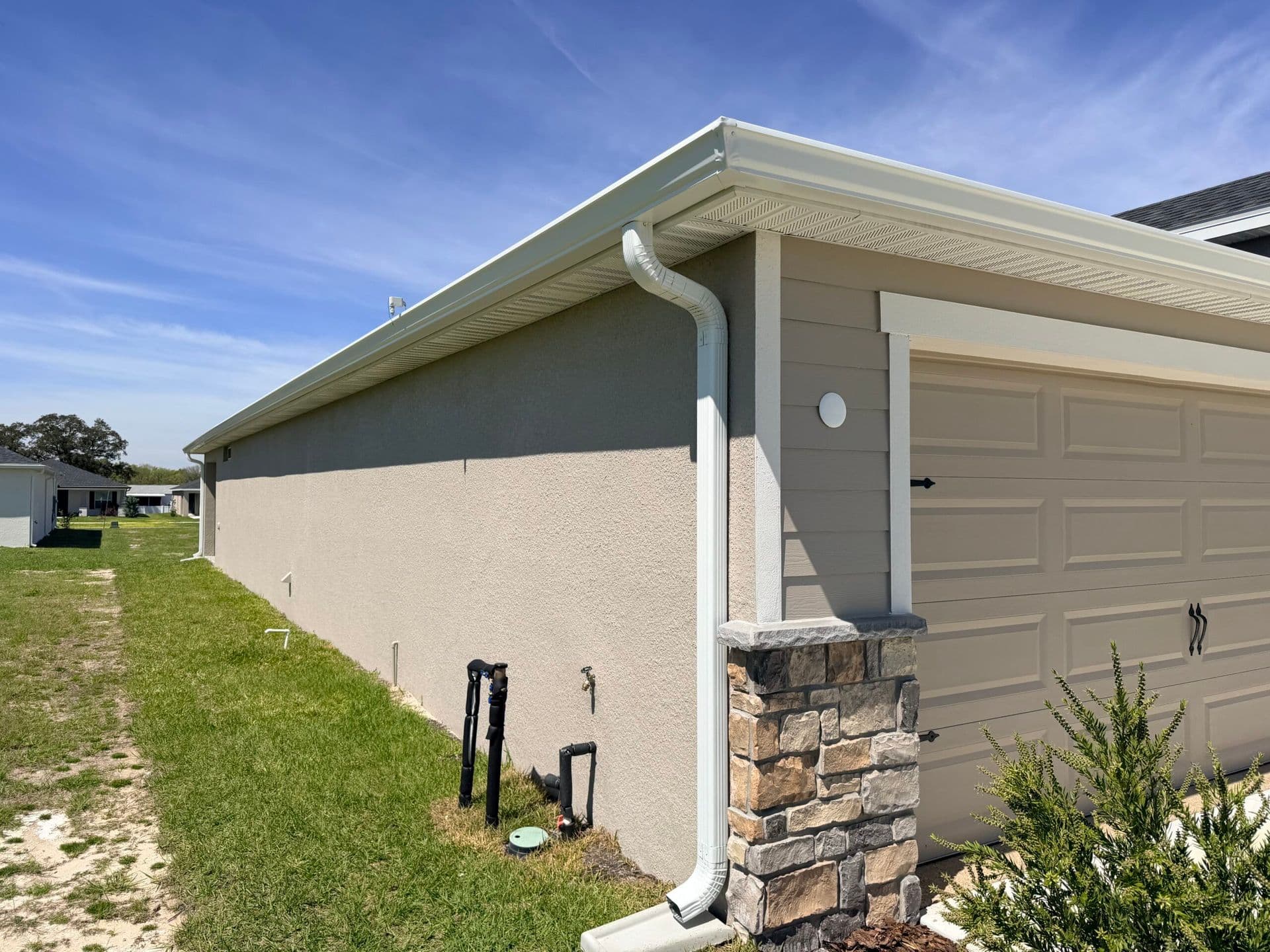
Roof valleys deserve special attention.
A valley can concentrate water from two roof planes into a relatively narrow section of gutter. It can also funnel leaves, twigs, seeds, and roof grit toward exactly the same point.
A guard that works perfectly across a straight roof edge may struggle badly underneath a high-volume valley.
Poor installations often treat the valley like any other section.
Better installations account for the higher concentration of both water and debris.
That may require changes in guard layout, gutter capacity, water diverters, or the surrounding drainage design.
If your guard only overflows beneath roof valleys, don't assume the entire system needs replacement.
The problem may be localized.
Red Flag #6: Sections Are Lifting, Sagging, or Separating
Do guard sections sit evenly?
Or do you see:
- Corners lifting
- Sections separating
- Mesh sagging
- Gaps between panels
- Loose fasteners
- Material pulling away from the gutter lip
- Uneven transitions
Those gaps become entry points for debris.
Wind can also make the problem worse. This Old House's installation testing found that some snap-on screen systems had a weak hold and recommended more secure attachment in high-wind locations.
A guard system shouldn't look like a collection of loosely connected pieces after a season or two.
Red Flag #7: The Installer Put Guards Over Bad Gutters
This may be the biggest problem of all.
Gutter guards do not fix:
- Sagging gutters
- Poor pitch
- Leaking seams
- Loose fascia
- Rotten wood
- Undersized downspouts
- Crushed outlets
- Improper gutter capacity
They simply cover the gutter. If the system underneath isn't functioning properly, adding a guard can make the real problem harder to see.
This is why a proper gutter-guard installation should begin with an evaluation of the gutters themselves.
Before installing anything, the contractor should check whether water actually flows toward the downspouts.
If it doesn't, the guard is not the first thing that needs attention.
Red Flag #8: Foam Is Holding Dirt, Seeds, or Plant Growth
But their design creates a different maintenance problem.
Instead of placing a filter over the gutter, foam fills much of the gutter itself.
Leaves stay on top, but fine debris can settle into the porous material. Over time the foam may hold dirt, pollen, organic material, and moisture.
Current testing has found that foam guards can clog, break down with exposure, and even create conditions where seedlings grow.
If you're pulling weeds out of your gutter guard, that's a pretty clear sign the system is no longer doing the job you paid it to do.
Red Flag #9: A Reverse-Curve System Is Missing Water Completely
Reverse-curve guards work differently from mesh.
Water follows a curved surface and is supposed to wrap around the edge into the gutter while debris falls away.
The idea can work—but installation geometry matters.
These systems rely on surface tension and need to be positioned correctly relative to the roof and gutter. Current testing specifically warns that reverse-curve systems require precise angles and generally aren't a good candidate for careless DIY installation.
If water shoots straight past the curve during ordinary rainfall, don't accept that as normal.
Something about the design, pitch, placement, or water volume needs to be evaluated.
Red Flag #10: The Guard Was Installed by Disturbing the Roof Incorrectly
Some guard systems slide beneath the first course of shingles.
That doesn't automatically make them a problem.
But any installation that interacts with roofing materials should be done carefully and in accordance with the relevant product and roofing requirements.
An installer shouldn't aggressively lift, bend, nail through, or alter shingles without understanding how those changes affect the roof system.
Reverse-curve products in particular may sit beneath roofing shingles, and current guidance notes that some designs may create roof-warranty concerns depending on how they're installed.
If you're considering gutter guards while also replacing your roof, that's an excellent time to coordinate both systems rather than treating them as unrelated projects.
Red Flag #11: Nobody Looked at the Downspouts
A perfectly clean gutter can still overflow if the water has nowhere to go.
Downspouts matter.
So do:
- Outlet size
- Number of downspouts
- Downspout placement
- Underground drainage
- Elbows
- Blockages
- Roof drainage volume
If your gutter guard installer never checked the outlets or downspouts, they evaluated only half the system.
Water has to get into the gutter. Then it has to get out.
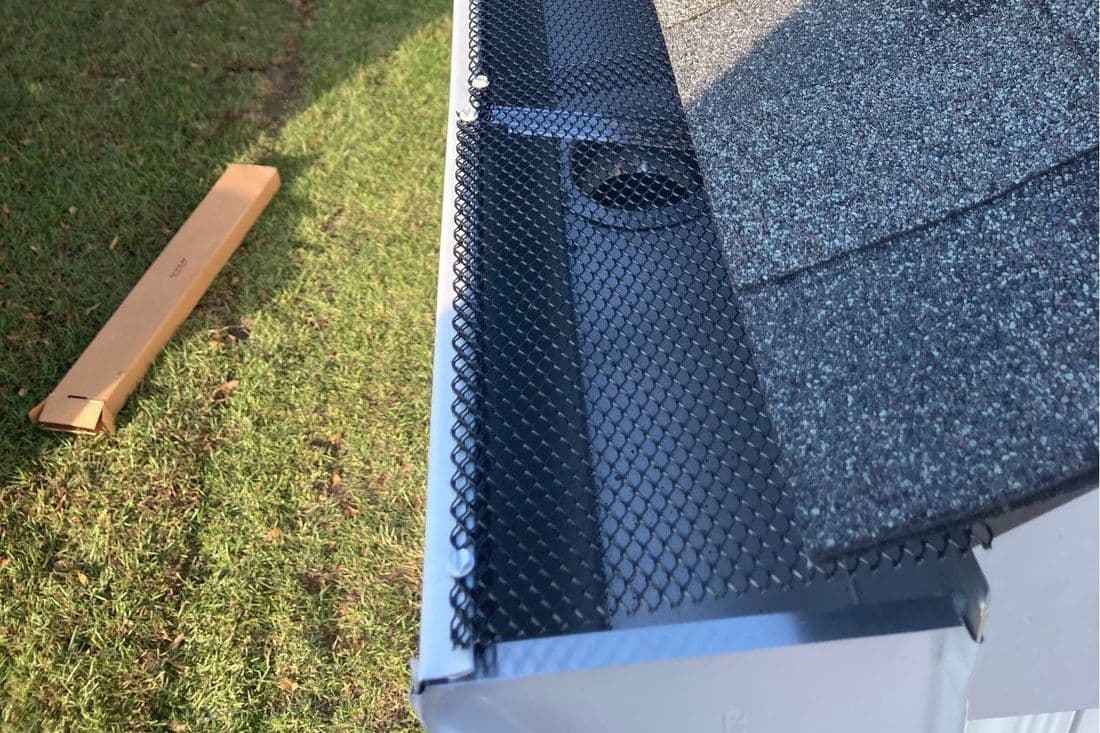
Red Flag #12: You Were Promised "Never Clean Your Gutters Again"
This is where expectations get homeowners into trouble.
No gutter guard eliminates every form of maintenance forever.
Even a strong system can collect:
- Pollen
- Dust
- Roof grit
- Twigs
- Moss
- Seed pods
- Windblown debris
And storms can move branches or damage sections.
The goal of a gutter guard is to reduce internal clogs and reduce cleaning frequency, not make the entire roof drainage system disappear from your maintenance list.
Homeowner survey data cited by This Old House found that guards reduced cleaning frequency for many homeowners, but only a minority reported never cleaning their gutters after installation.
A contractor promising zero maintenance forever is selling an expectation that the product may not be able to meet.
Does a Failing Gutter Guard Need to Be Replaced?
Not always.
Sometimes the problem can be repaired.
A good inspection should determine whether the issue is:
Product failure — the guard is damaged, deteriorated, or fundamentally wrong for the debris.
Installation failure — the product is good but was fitted poorly.
Gutter failure — the gutter pitch, capacity, fascia, or downspouts are the actual problem.
Maintenance failure — the system simply needs surface debris removed and outlets cleared.
Roof-drainage mismatch — valleys or large roof planes are sending more water to a section than it can handle.
Replacing an entire system before identifying which one of those problems exists can mean paying twice and getting the same result.
When Replacement Makes More Sense Than Repair
Replacement becomes more reasonable when:
The guard material has deteriorated
The system repeatedly clogs with local debris
Large portions are loose or warped
Sections cannot be reinstalled correctly
Foam has degraded inside the gutters
The design consistently can't handle rainfall
Fine debris continually enters the gutter
The existing gutters need replacement too
The product isn't suited to the surrounding trees
This is especially common when an inexpensive DIY system was installed as a permanent solution.
Sometimes fixing the last installation means starting over.
What a Good Gutter Guard Installation Should Look Like
A proper installation should feel almost boring.
Everything should line up.
The guard should sit securely across the gutter without obvious gaps or loose sections.
Water should enter the system during rainfall rather than shooting past it.
Debris should stay primarily above the gutter rather than accumulating inside.
The contractor should have looked at the existing gutters, downspouts, roof valleys, pitch, and surrounding tree debris before recommending a product.
And someone should be able to explain why that particular guard belongs on your house.
Not just why it's the one they sell.
Gutter Guard Installation Checklist

Before approving a replacement system, ask the installer:
- What is causing my current guards to fail?
- Are my existing gutters pitched correctly?
- Are the gutters large enough for this roof?
- Are my downspouts properly sized and positioned?
- How will this system handle roof valleys?
- What type of debris is this guard designed to stop?
- How does it handle pine needles and roof grit?
- Will anything be installed beneath or through my shingles?
- How is each section secured?
- What maintenance will still be required?
- What does the warranty actually cover?
If the contractor can't explain the failure of the old system, be cautious about letting them sell you a new one.
Frequently Asked Questions About Failing Gutter Guards
Why are my gutter guards overflowing?
Overflow can be caused by surface debris, clogged downspouts, poor gutter pitch, undersized gutters, excessive valley runoff, or a guard that can't accept water quickly enough. The cause should be diagnosed before replacing the system.
Can gutter guards be installed incorrectly?
Absolutely. Incorrect pitch, loose attachment, gaps, improper transitions, poor valley treatment, and installing a guard over existing gutter problems can all reduce performance.
Why do my gutters clog even though I have guards?
The guard openings may be large enough for pine needles, roof grit, seeds, or other fine debris to enter. Alternatively, debris may be entering through gaps or transitions in the installation.
Should leaves sit on top of gutter guards?
Some surface debris is normal. A properly designed system should encourage much of that debris to dry and shed naturally. Thick mats of leaves that repeatedly block water can indicate poor pitch, heavy tree exposure, or a system that needs cleaning.
Do micro-mesh gutter guards clog?
They can collect fine material on the surface, but properly designed micro-mesh systems generally perform very well at keeping debris out of the gutter itself. Current testing ranks micro-mesh among the strongest-performing guard types.
Can you replace gutter guards without replacing the gutters?
Often, yes—if the existing gutters are properly pitched, securely attached, appropriately sized, and in good condition. If the gutter system itself is failing, replacing only the guards may not solve the problem.
If the Last Gutter Guard Installation Failed, Find Out Why Before Paying Again
A failing gutter guard isn't always proof that gutter guards don't work.
Sometimes it's proof that the wrong product was installed on the wrong house—or the right product was installed badly.
At Home Exteriors by The Men with Tools, we believe the first step should be figuring out what the last installation got wrong.
If your guards overflow, clog, sag, trap debris, or simply haven't lived up to what you were promised, we can evaluate the full drainage system and determine whether repair, replacement, or a different gutter-protection approach makes sense.
Because replacing bad work without understanding why it failed is how homeowners end up paying for the same problem twice.
Visit Us

Mon-Fri: 9AM-5PM
Sat: 10AM-4PM
Sun: Closed
Mon-Fri: 8AM-8PM
Sat: 10AM-4PM
Sun: Closed
Mon-Fri: 10AM-6PM
Sat: 10AM-6PM
Sun: Closed
Visit Us
Mon-Fri: 9AM-5PM
Sat: 10AM-4PM
Sun: Closed
Mon-Fri: 8AM-8PM
Sat: 10AM-4PM
Sun: Closed
Mon-Fri: 10AM-6PM
Sat: 10AM-6PM
Sun: Closed
